Why Does My LVP Floor Feel Sticky After Mopping?
A sticky luxury vinyl plank floor usually isn’t still dirty—it may be covered with cleaning-product residue.
Using too much cleaner, mixing incompatible products or repeatedly applying products marketed as “shine restorers” can leave a thin film across LVP. That film attracts soil, holds footprints and makes the floor look dirty again shortly after cleaning.
Adding more cleaner often makes the problem worse.
The Cleaner Isn’t Disappearing
Many homeowners assume floor cleaner evaporates with the water. Water may evaporate, but detergents, fragrances, oils and polymers can remain behind.
After repeated mopping, these residues can build into layers.
Common symptoms include:
- Sticky or tacky floors
- Bare footprints appearing quickly
- Dark traffic lanes
- A hazy or cloudy appearance
- Mop streaks visible in sunlight
- Pet hair clinging to the floor
- Shoes squeaking
- Floors that seem dirty immediately after cleaning
The problem may be residue—not a lack of cleaning.
Products That Can Create LVP Buildup
Residue can develop from:
- Using more cleaner than the label recommends
- Pouring concentrated cleaner directly onto the floor
- Oil soaps
- Mop-and-shine products
- Wax-based products
- Dish detergent
- Laundry detergent
- Repeated applications of scented cleaners
- Dirty mop water
- Steam-mop additives
- Mixing several cleaners together
Products designed for hardwood, tile or laminate may not be appropriate for LVP.
Why More Cleaner Doesn’t Mean a Cleaner Floor
Detergent molecules help loosen soil, but they must also be removed.
If too much detergent is used—or the floor is never properly rinsed—the remaining cleaner becomes a soil magnet.
That creates a frustrating cycle:
The floor looks dirty.
More cleaner is applied.
Additional residue remains.
The floor attracts more soil.
The homeowner cleans it even more often.
Eventually, the floor may look worse after mopping than it did before.
A Simple Residue Test
Choose a small, hidden section of flooring.
Wipe it several times with a clean white microfiber towel lightly dampened with plain water. If the towel begins producing foam, feels unusually slick or collects cloudy residue, cleaning-product buildup may be present.
Do not flood the floor during this test.
Water can enter plank seams and affect the adhesive, edges or subfloor.
How to Maintain LVP Correctly
1. Remove Dry Soil First
Vacuum or dust-mop before using liquid.
Sand and grit can scratch the wear layer when pushed around with a wet mop.
2. Use the Correct Amount of Cleaner
Follow the manufacturer’s dilution instructions. More product does not improve the result.
3. Use Clean Microfiber
A dirty mop spreads grease, soil and old chemicals across the floor.
Replace or rinse microfiber pads as they become dirty.
4. Work in Small Sections
Do not allow cleaning solution to sit heavily on the floor or enter open seams.
5. Remove the Cleaning Solution
When appropriate for the product and flooring manufacturer, use a separate clean microfiber pad to remove remaining residue.
6. Dry the Floor
Drying the floor reduces streaking and prevents water from remaining around plank edges.
Why Steam Mops Can Be Risky
Steam introduces heat and moisture near plank seams.
Depending on the flooring and installation, this can contribute to:
- Edge lifting
- Adhesive problems
- Warping
- Separation
- Moisture entering beneath the floor
- Warranty concerns
Check the flooring manufacturer’s instructions before using steam.
Can Professional Cleaning Remove the Buildup?
Often, yes—but the process must be controlled.
HSquared may use:
- Dry-soil removal
- An LVP-compatible cleaning solution
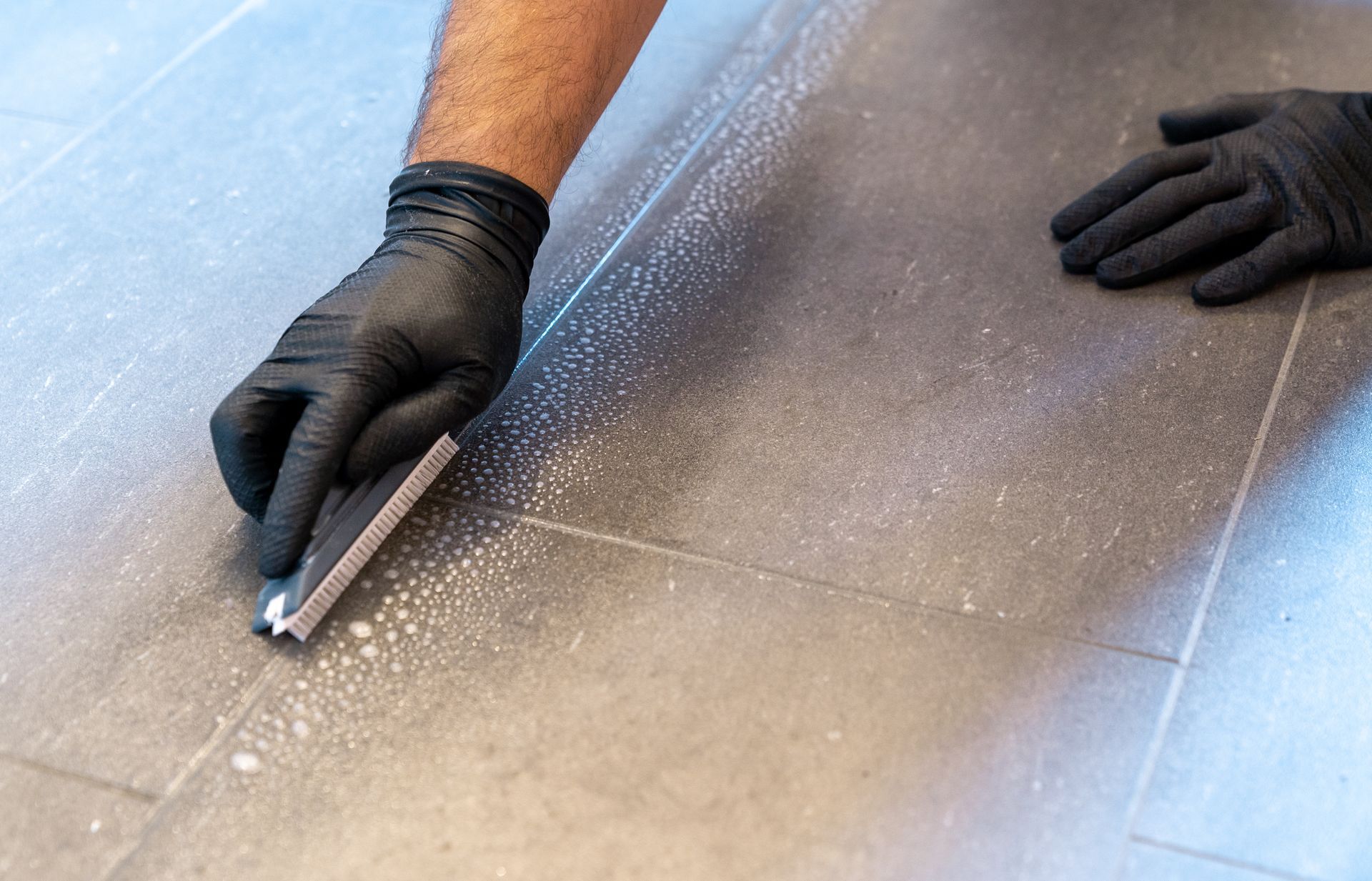
- Controlled mechanical agitation
- Recovery of loosened soil and residue
- Neutral rinsing when appropriate
- Air movement and drying
- Test areas before treating the entire floor
The goal is to remove contamination without flooding seams, scratching the wear layer or applying another coating.
What Not to Put on LVP
Unless specifically approved by the flooring manufacturer, avoid:
- Floor wax
- Furniture polish
- Oil soap
- Bleach mixtures
- Abrasive powders
- Straight vinegar
- Highly alkaline degreasers
- Mop-and-shine coatings
- Undiluted disinfectants
- Dish soap
Some products may temporarily make the floor look shiny while creating a long-term buildup problem.
Frequently Asked Questions
Why are my socks dirty after I mop?
The floor may still contain loosened soil, or cleaner residue may be attracting new dirt. A dirty mop can also redistribute soil instead of removing it.
Can I use vinegar on LVP?
Do not assume vinegar is safe for every LVP floor. Follow the flooring manufacturer’s care instructions, especially if the floor is still under warranty.
Why does my LVP look cloudy?
Cloudiness may be caused by cleaner buildup, hard-water minerals, an applied coating or damage to the wear layer.
Can LVP be professionally scrubbed?
Yes, but the equipment, pad, chemistry and moisture level must be appropriate for the flooring. Aggressive scrubbing can damage the finish.
Should LVP be waxed?
Most modern LVP is manufactured with a wear layer and is not intended to receive traditional floor wax.
Can every sticky floor be restored?
Most residue-related problems can be improved. Permanent wear-layer damage or an incompatible coating may require additional evaluation.
Stop Adding Cleaner to a Residue Problem
If your LVP feels sticky, looks cloudy or becomes dirty immediately after mopping, don’t automatically apply a stronger cleaner.
HSquared Carpet Cleaning can test the floor, identify likely residue and determine the safest cleaning method.
HSquared Carpet Cleaning
Professional carpet, upholstery, tile, LVP and hard-floor cleaning throughout North Carolina.
Share Post
Recent Posts