Why Every Water Extraction Job Needs Both Air Movers and a Dehumidifier
Removing standing water is only the beginning of a proper water-damage response.
Carpet, padding, subflooring, drywall and wood can all retain moisture after the visible water has been extracted. A surface may feel dry while moisture remains trapped underneath or inside surrounding materials.
That is why HSquared uses two different types of drying equipment:
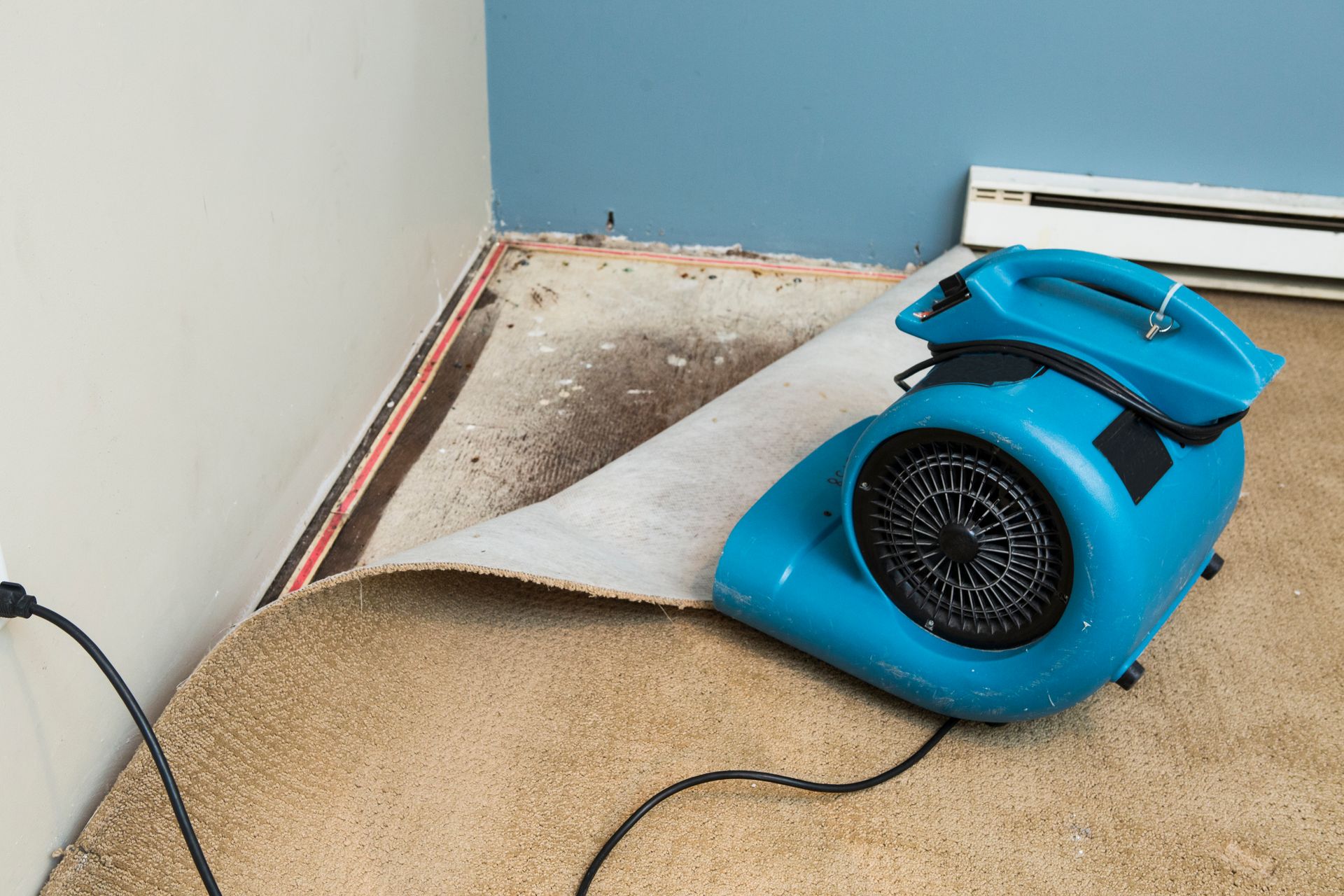
Air movers create evaporation.
They move dry air across wet surfaces, helping moisture leave carpet, flooring, walls and other materials.
Dehumidifiers remove that moisture from the air.
As air movers increase evaporation, the moisture enters the surrounding air. A professional dehumidifier captures that moisture and removes it from the structure.
Using air movers without adequate dehumidification can leave the room extremely humid. Using a dehumidifier without enough airflow can make evaporation unnecessarily slow. The equipment must work together as a drying system.
Why Fast Drying Matters
Moisture that remains hidden can contribute to:
- Persistent musty odors
- Swollen baseboards or flooring
- Carpet delamination
- Damage to drywall and subflooring
- Bacterial activity
- Unnecessary demolition and replacement
Professional water restoration is not simply “sucking up the water.” It requires extraction, airflow, dehumidification and moisture monitoring.
HSquared technicians use professional extraction equipment, air movers, dehumidifiers, moisture meters and thermal-imaging technology to locate affected areas and help verify drying progress.
The HSquared Standard
Every water-extraction job should receive the drying equipment appropriate for the affected materials and conditions. Our goal is to dry the structure—not merely make the surface appear dry.
If your home, apartment or rental property experiences a leak, overflow or unexpected water intrusion, begin extraction and structural drying as quickly as possible.
HSquared Carpet Cleaning & Water Restoration
Professional carpet restoration and 24-hour emergency water response across North Carolina.
Call 336-575-4663 or 704-575-6261.
Share Post
Recent Posts