Why Did My Carpet Develop Ripples After Cleaning?
Carpet that develops waves or ripples while damp may flatten as it dries. However, ripples that remain after complete drying usually indicate an underlying installation, tension, backing or environmental problem—not soil left in the carpet.
The important question is not simply, “Did the ripples appear after cleaning?” It is, “Did the moisture temporarily reveal a condition that was already developing?”
Why Damp Carpet Can Temporarily Ripple
Broadloom carpet contains several layers. Depending on its construction, moisture and increased humidity can temporarily affect the carpet backing, cushion and overall tension.
A carpet that appeared flat while dry may become slightly relaxed while damp. Existing slack can then become visible as waves.
This is more likely when:
- The carpet wasn’t power-stretched during installation
- It has loosened with age
- Heavy furniture has been dragged across it
- Indoor humidity is high
- The backing or adhesive has weakened
- The carpet previously experienced excess water
- The tack strip no longer holds the carpet securely
- The carpet spans a large room without adequate tension
Temporary ripples often decrease as the carpet dries and its backing stabilizes. Persistent ripples deserve further inspection. Industry explanation of post-cleaning ripples
Did Professional Cleaning Cause the Problem?
Timing alone does not prove causation.
Cleaning can make preexisting slack more visible because moisture temporarily changes the backing’s dimensions. A properly installed carpet in good condition will generally tolerate professional cleaning without developing permanent waves.
However, technicians must still control moisture, complete adequate extraction passes and promote proper drying. Overwetting can extend drying time and make temporary dimensional changes more noticeable.
That is why HSquared emphasizes:
- Correct chemistry
- Controlled solution application
- Thorough extraction
- Multiple dry strokes
- Air movement
- Appropriate indoor temperature
- Communication about preexisting ripples or loose areas
Temporary Ripples Versus Permanent Buckling
Temporary moisture-related ripples
These usually:
- Appear during or shortly after cleaning
- Occur while the carpet is still damp
- Gradually become smaller during drying
- Improve once indoor humidity returns to normal
- Disappear without stretching or repair
Persistent installation-related ripples
These may:
- Remain after the carpet is completely dry
- Reappear during humid weather
- Extend across the entire room
- Move when walked on
- Become worse after furniture is dragged
- Create a trip hazard
- Require professional power-stretching
A ripple that remains after complete drying should be evaluated instead of repeatedly wet-cleaned.
Why Power-Stretching Matters
A knee kicker helps position carpet around the perimeter, but it does not create the same uniform tension as a power stretcher.
Carpet installed without proper stretching may look acceptable initially. Over time, normal traffic, furniture movement and humidity can allow the hidden slack to form visible waves.
Professional power-stretching pulls the carpet evenly across the room and resets it on the tack strip. Depending on the severity, furniture may need to be moved and excess carpet may need to be trimmed.
Could It Be Delamination Instead?
Not every raised area is a stretching problem.
Carpet backing layers are commonly bonded together. If that bond fails, the carpet may develop a bubble or loose area even when its perimeter tension is adequate. This is called delamination.
Possible contributors include:
- Carpet age
- Manufacturing weakness
- Previous flooding
- Repeated overwetting
- Harsh or incompatible chemicals
- Pet-urine contamination
- Excessive alkalinity
- Solvents or adhesive damage
Stretching alone may not permanently correct significant delamination. The carpet could require localized repair or replacement.
What Should a Homeowner Do?
If ripples appear after cleaning:
- Allow the carpet to dry completely.
- Keep the HVAC operating around a comfortable indoor temperature.
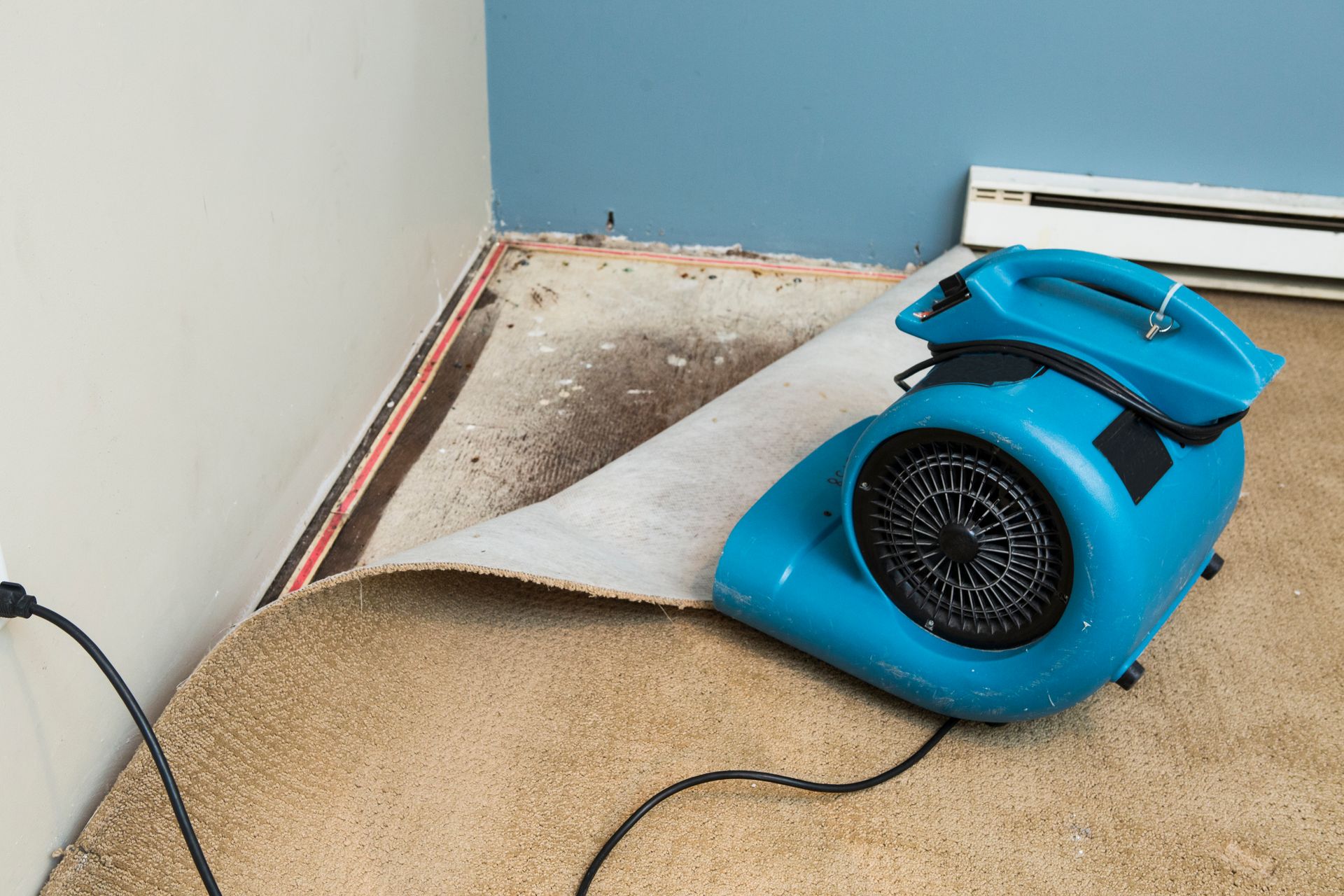
- Use fans when appropriate.
- Avoid placing heavy furniture on raised areas.
- Do not pull, cut or staple the carpet.
- Photograph the area while damp and again after drying.
- Contact the cleaner if the carpet does not flatten.
Drying time varies with carpet construction, humidity, airflow and the amount of moisture used.
What Not to Do
Do not attempt to flatten the carpet by:
- Saturating it again
- Ironing or steaming it
- Cutting the raised section
- Nailing or stapling it to the floor
- Placing heavy furniture on the wave
- Pulling one corner by hand
- Applying adhesive through the carpet face
These shortcuts can damage the carpet, cushion, subfloor or tack strip and make a proper repair more difficult.
When Professional Help Is Appropriate
Call HSquared when:
- Ripples remain after complete drying
- The carpet had waves before cleaning
- An area feels loose or detached
- Seams are separating
- The carpet was exposed to flooding
- Furniture was recently dragged across it
- The ripples create a trip hazard
- The carpet needs cleaning and stretching
Because HSquared provides carpet cleaning, stretching and repair, we can evaluate both the surface condition and the underlying mechanical problem.
Frequently Asked Questions
How long should I wait before worrying about ripples?
Allow the carpet to dry completely. If the waves remain after drying and normal indoor humidity is restored, schedule an evaluation.
Can carpet cleaning reveal poor installation?
Yes. Moisture may temporarily relax the backing and make existing installation slack more visible.
Will running fans help?
Air movement can shorten drying time and help temporary moisture-related ripples settle sooner.
Can the carpet be stretched while it is wet?
Carpet should generally be evaluated and repaired after it has dried and stabilized.
Does every ripple require replacement?
No. Many persistent ripples can be corrected by professional power-stretching. Delamination or severely damaged backing may require repair or replacement.
Should carpet be stretched before or after cleaning?
It depends on the condition. Heavily soiled carpet may need cleaning first, while severely loose carpet may require stabilization beforehand. HSquared can evaluate the correct order.
Let HSquared Diagnose It Correctly
A carpet ripple is not automatically proof of improper cleaning—and it should not automatically be ignored.
HSquared Carpet Cleaning can determine whether you are seeing temporary moisture response, installation slack, delamination or damage from a previous water event.
Charlotte and Lake Norman:
704-575-626
Raleigh and the Triangle:
919-830-1287
24-hour water extraction available
Share Post
Recent Posts