Why Does Carpet Sometimes Smell WORSE After It Gets Wet?

August 12, 2026

๐Ÿงผ HSQUARED DAILY HOME TIP: Why Does Carpet Sometimes Smell WORSE After It Gets Wet?

Ever notice that a carpet can seem fine… until it gets wet?


Then suddenly you smell dog urine, mustiness, old spills, or odors you didn’t even know were there.

There’s a reason.


๐Ÿ’ง Moisture can reactivate what’s hiding BELOW the carpet.

A carpet may look clean on the surface while contamination is still trapped in:

• The carpet backing
• Padding
• Subfloor
• Tack strip
• Baseboards
• Previous spill or pet-treatment areas


This is especially common with pet urine.


Urine doesn’t always stay where you see the stain. It can soak through the carpet and pad and reach the subfloor. As it dries, odor-producing residue can remain behind.


Add moisture again — from cleaning, humidity, a spill, or even a water leak — and that odor can become noticeable again.


โš ๏ธ That’s why simply cleaning the carpet isn’t always enough.

At HSQUARED Carpet Cleaning, we want to determine where the problem actually is before throwing chemicals and fragrances at it.

Depending on the situation, treatment can involve:

๐Ÿ”Ž Identifying contaminated areas
๐Ÿงน Thorough cleaning and extraction
๐Ÿ• Targeted pet-odor treatment
๐Ÿ’ง Extraction from the carpet and padding when appropriate
๐ŸŒฌ๏ธ Proper drying
๐Ÿงช Specialized odor-removal treatment for persistent problems
๐Ÿ  Addressing contamination below the carpet when necessary

And here’s something homeowners should know:


A fragrance is not odor removal.


If somebody sprays something that makes the room smell like cherries for three days but the urine smell comes back next week, the source wasn’t eliminated.


Our goal isn’t to cover up the stink.


Our goal is to figure out WHY it stinks.


That difference matters.

๐Ÿ“ Serving homeowners, property managers and businesses throughout North Carolina.


HSQUARED Carpet Cleaning

Carpet • Upholstery • Tile & Grout • Pet Treatment • Odor Removal • Water Extraction

๐ŸŒ hsquaredcarpetcleaning.com


๐Ÿ’ฌ Tomorrow’s HSQUARED Tip:

Why professional carpet cleaning should include more than simply spraying detergent and sucking it back out.

๏ปฟ

#HSQUARED #CarpetCleaning #PetOdor #PetUrine #OdorRemoval #ProfessionalCarpetCleaning #NorthCarolina #NCBusiness #PropertyManagement #HomeMaintenance #CarpetCleaningTips


Share Post

Recent Posts
August 31, 2026
Have you ever noticed that a basement, vehicle, boat compartment or rental property smells worse on a warm, humid day? That does not necessarily mean a new odor suddenly appeared. Humidity can reactivate odor-producing residue and increase the release of odor molecules into the air. Porous materials can hold contamination from: Previous water intrusion Pet accidents Smoke Food residue Damp fabrics Bacterial activity Organic material trapped beneath flooring or inside cabinets When humidity rises, these materials absorb moisture. That moisture can increase microbial activity and help previously trapped odor compounds become noticeable again. This is why spraying fragrance into the room often provides only temporary relief. The fragrance may briefly cover the odor, but it does not identify or correct the underlying source. Odor Removal Begins With Source Identification A professional odor-removal plan should answer three questions: Where is the odor coming from? What material is holding the contamination? Can that material be cleaned and treated, or must it be removed? The source may be underneath carpet, inside padding, behind a refrigerator, within unfinished wood, inside an HVAC return or beneath flooring. Once the source is identified, contaminated surfaces should be cleaned and treated appropriately. Odor molecules that remain in inaccessible spaces or porous materials may then require a controlled professional treatment. Where Chlorine Dioxide Fits Chlorine dioxide is an oxidizer—not a perfume. Under controlled conditions, it can reach odor molecules in cracks, crevices and porous materials that ordinary surface cleaning may miss. However, chlorine-dioxide treatments must be performed according to the product instructions. People, pets and plants must be removed when required, and the treated space must be properly ventilated before reentry. No Scents/Odor Outlaw combines source correction, professional cleaning and carefully selected odor-treatment technology. We do not want to make an odor smell “better.” We want to determine why it exists and remove it at its source. For persistent smoke, pet, food, musty, vehicle, boat or rental-property odors: Call 866-387-6367
August 28, 2026
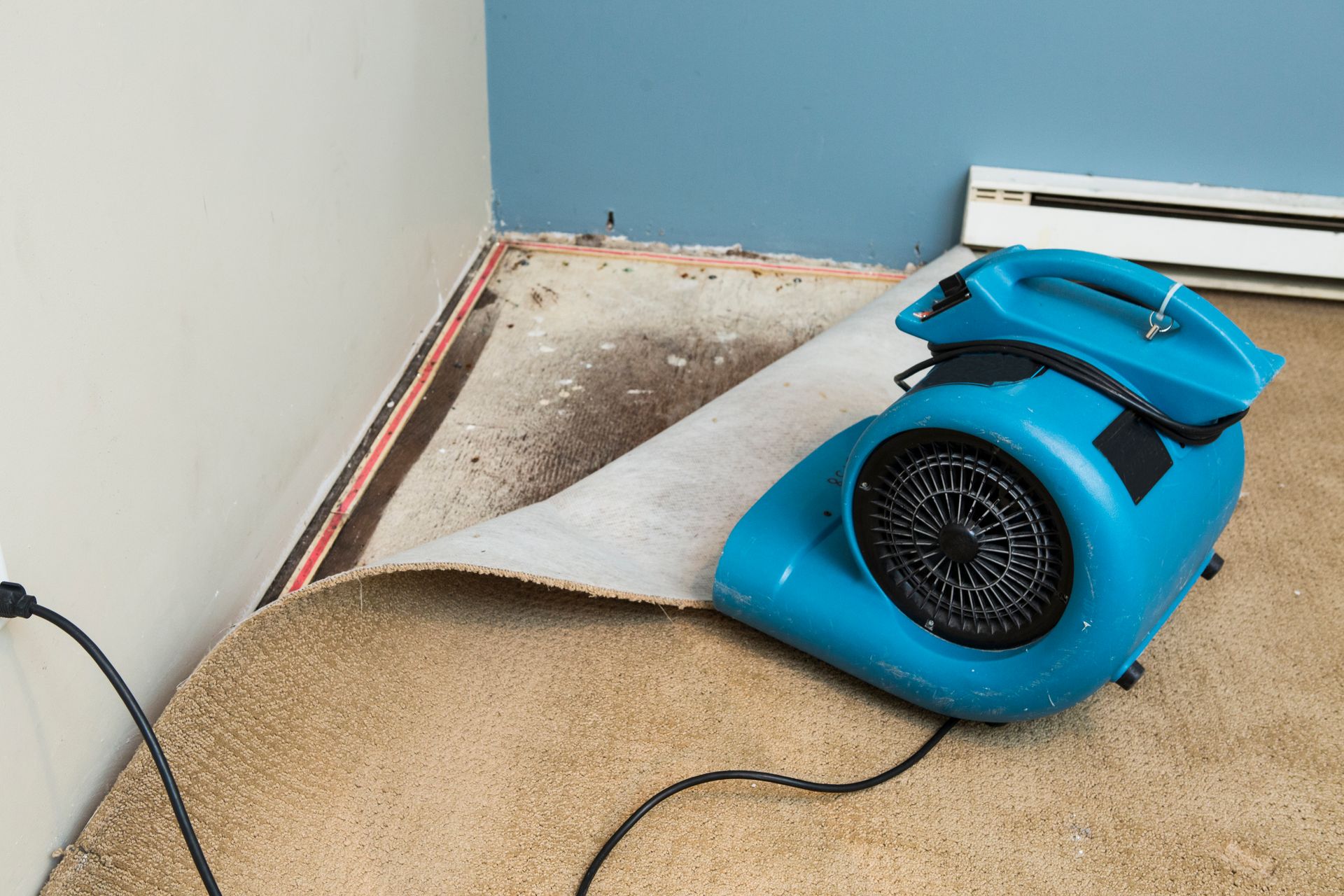
Removing standing water is only the beginning of a proper water-damage response. Carpet, padding, subflooring, drywall and wood can all retain moisture after the visible water has been extracted. A surface may feel dry while moisture remains trapped underneath or inside surrounding materials. That is why HSquared uses two different types of drying equipment: Air movers create evaporation. They move dry air across wet surfaces, helping moisture leave carpet, flooring, walls and other materials. Dehumidifiers remove that moisture from the air. As air movers increase evaporation, the moisture enters the surrounding air. A professional dehumidifier captures that moisture and removes it from the structure. Using air movers without adequate dehumidification can leave the room extremely humid. Using a dehumidifier without enough airflow can make evaporation unnecessarily slow. The equipment must work together as a drying system.
Gloved hands use a utility knife to score a gray tile floor.
August 27, 2026
Grout can darken again because of remaining soil, moisture, cleaner residue, damaged sealer or permanent discoloration. Learn how to identify the real cause.
More Posts