WHY DOES AN ODOR COME BACK AFTER CLEANING?

August 18, 2026

If an odor disappears for a few hours and then returns, the source probably wasn’t completely removed.


Odor-causing contamination can travel beneath carpet, into padding, subfloors, drywall, cabinets, upholstery, HVAC systems, and other porous materials. Air fresheners and scented sprays may cover the smell temporarily, but they do not remove what is producing it.


Humidity and warmer temperatures can also reactivate trapped odor molecules, making an old smell suddenly noticeable again.


At No Scents, we focus on finding and treating the source. Depending on the situation, our odor-removal process may include:


✅ Professional cleaning and extraction
✅ Enzyme or oxidation treatments
✅ Treatment beneath carpet and padding
✅ Refrigerator and appliance odor removal
✅ Chlorine dioxide treatment for difficult vacant-space odors
✅ Proper ventilation and follow-up evaluation


Strong treatments must be selected for the specific environment and performed with the proper safety precautions. Chlorine dioxide spaces must remain unoccupied during treatment and be thoroughly ventilated before reentry.


Don’t keep covering an odor with another scent. Let No Scents help eliminate the reason it is there.


📞 Call or text: 704-575-6261
🏠 Locally owned and operated
💨 No perfume. No cover-up. No Scents.


#NoScents #OdorRemoval #PetOdorRemoval #SmokeOdorRemoval #ChlorineDioxide #RefrigeratorOdor #MooresvilleNC #CharlotteNC


Share Post

Recent Posts
August 31, 2026
Have you ever noticed that a basement, vehicle, boat compartment or rental property smells worse on a warm, humid day? That does not necessarily mean a new odor suddenly appeared. Humidity can reactivate odor-producing residue and increase the release of odor molecules into the air. Porous materials can hold contamination from: Previous water intrusion Pet accidents Smoke Food residue Damp fabrics Bacterial activity Organic material trapped beneath flooring or inside cabinets When humidity rises, these materials absorb moisture. That moisture can increase microbial activity and help previously trapped odor compounds become noticeable again. This is why spraying fragrance into the room often provides only temporary relief. The fragrance may briefly cover the odor, but it does not identify or correct the underlying source. Odor Removal Begins With Source Identification A professional odor-removal plan should answer three questions: Where is the odor coming from? What material is holding the contamination? Can that material be cleaned and treated, or must it be removed? The source may be underneath carpet, inside padding, behind a refrigerator, within unfinished wood, inside an HVAC return or beneath flooring. Once the source is identified, contaminated surfaces should be cleaned and treated appropriately. Odor molecules that remain in inaccessible spaces or porous materials may then require a controlled professional treatment. Where Chlorine Dioxide Fits Chlorine dioxide is an oxidizer—not a perfume. Under controlled conditions, it can reach odor molecules in cracks, crevices and porous materials that ordinary surface cleaning may miss. However, chlorine-dioxide treatments must be performed according to the product instructions. People, pets and plants must be removed when required, and the treated space must be properly ventilated before reentry. No Scents/Odor Outlaw combines source correction, professional cleaning and carefully selected odor-treatment technology. We do not want to make an odor smell “better.” We want to determine why it exists and remove it at its source. For persistent smoke, pet, food, musty, vehicle, boat or rental-property odors: Call 866-387-6367
August 28, 2026
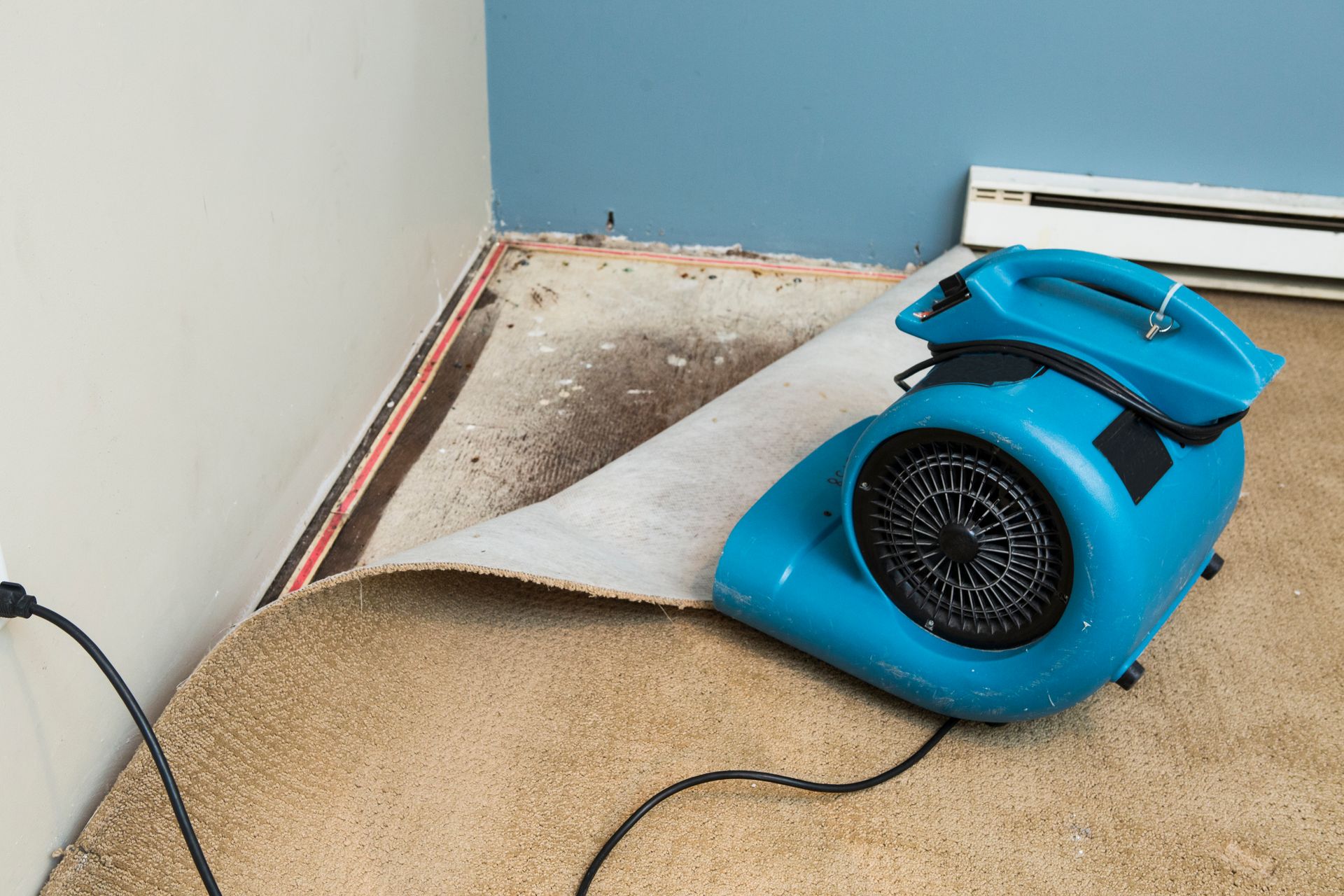
Removing standing water is only the beginning of a proper water-damage response. Carpet, padding, subflooring, drywall and wood can all retain moisture after the visible water has been extracted. A surface may feel dry while moisture remains trapped underneath or inside surrounding materials. That is why HSquared uses two different types of drying equipment: Air movers create evaporation. They move dry air across wet surfaces, helping moisture leave carpet, flooring, walls and other materials. Dehumidifiers remove that moisture from the air. As air movers increase evaporation, the moisture enters the surrounding air. A professional dehumidifier captures that moisture and removes it from the structure. Using air movers without adequate dehumidification can leave the room extremely humid. Using a dehumidifier without enough airflow can make evaporation unnecessarily slow. The equipment must work together as a drying system.
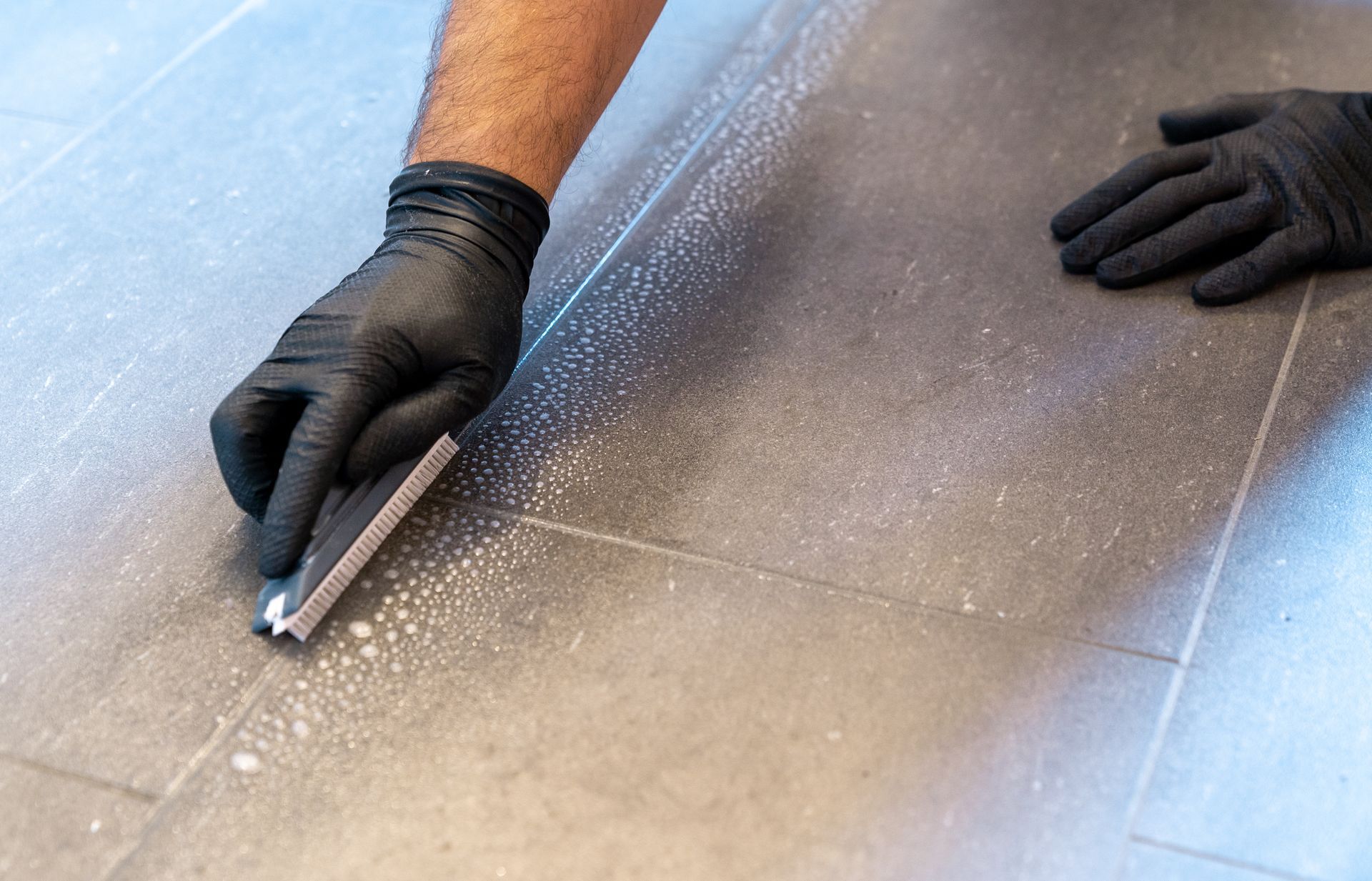
Gloved hands use a utility knife to score a gray tile floor.
August 27, 2026
Grout can darken again because of remaining soil, moisture, cleaner residue, damaged sealer or permanent discoloration. Learn how to identify the real cause.
More Posts