Carpet Cleaning Myth #2

August 8, 2026

“Steam cleaning ruins your carpet.”

We hear this one all the time.

The truth is…

Professional Hot Water Extraction (often called “steam cleaning”) doesn’t ruin carpet. Poor workmanship does.

When performed correctly, Hot Water Extraction is the cleaning method recommended by many major carpet manufacturers because it removes deep soil and contaminants while helping preserve the carpet’s appearance.

So why do some people have a bad experience?

Usually it’s because of one (or more) of these mistakes:

❌ Too much water left behind
❌ Poor extraction, leaving carpet overly wet
❌ No pre-treatment to loosen soil
❌ Dirty equipment that leaves residue
❌ Rushing through the job
❌ Skipping proper drying techniques


At HSquared Carpet Cleaning, we believe great carpet cleaning starts long before the extraction wand touches your floor.

Our process includes:
✔️ Careful inspection
✔️ Selecting the right cleaning solution for your carpet
✔️ Pre-treatment to break down embedded soil
✔️ Mechanical agitation when needed to lift dirt from deep within the fibers
✔️ Thorough Hot Water Extraction to flush away contaminants
✔️ Multiple dry passes to remove as much moisture as possible
✔️ Grooming the carpet to restore its appearance and promote faster drying

Our goal isn’t just to leave your carpet looking clean today.


It’s to help it stay cleaner longer and last for years to come.

Your carpet is one of the largest investments inside your home. Taking care of it with the right process can extend its life, improve indoor air quality, and keep your home looking its best.

Over the next several weeks, we’ll continue sharing professional carpet care tips, common myths, stain removal advice, and behind-the-scenes insights so you can make informed decisions about caring for your home.


Have a carpet cleaning question you’ve always wondered about? Ask it in the comments, and we may feature it in our next “Carpet Cleaning Myth” post!


HSquared Carpet Cleaning
Cleaning Beyond the Surface. Educating Beyond the Sale.


#HSquaredCarpetCleaning #CarpetCleaning #HealthyHome #HotWaterExtraction #CarpetCare #IndoorAirQuality #NorthCarolina #RaleighNC #HomeMaintenance #CleaningExperts


Share Post

Recent Posts
August 31, 2026
Have you ever noticed that a basement, vehicle, boat compartment or rental property smells worse on a warm, humid day? That does not necessarily mean a new odor suddenly appeared. Humidity can reactivate odor-producing residue and increase the release of odor molecules into the air. Porous materials can hold contamination from: Previous water intrusion Pet accidents Smoke Food residue Damp fabrics Bacterial activity Organic material trapped beneath flooring or inside cabinets When humidity rises, these materials absorb moisture. That moisture can increase microbial activity and help previously trapped odor compounds become noticeable again. This is why spraying fragrance into the room often provides only temporary relief. The fragrance may briefly cover the odor, but it does not identify or correct the underlying source. Odor Removal Begins With Source Identification A professional odor-removal plan should answer three questions: Where is the odor coming from? What material is holding the contamination? Can that material be cleaned and treated, or must it be removed? The source may be underneath carpet, inside padding, behind a refrigerator, within unfinished wood, inside an HVAC return or beneath flooring. Once the source is identified, contaminated surfaces should be cleaned and treated appropriately. Odor molecules that remain in inaccessible spaces or porous materials may then require a controlled professional treatment. Where Chlorine Dioxide Fits Chlorine dioxide is an oxidizer—not a perfume. Under controlled conditions, it can reach odor molecules in cracks, crevices and porous materials that ordinary surface cleaning may miss. However, chlorine-dioxide treatments must be performed according to the product instructions. People, pets and plants must be removed when required, and the treated space must be properly ventilated before reentry. No Scents/Odor Outlaw combines source correction, professional cleaning and carefully selected odor-treatment technology. We do not want to make an odor smell “better.” We want to determine why it exists and remove it at its source. For persistent smoke, pet, food, musty, vehicle, boat or rental-property odors: Call 866-387-6367
August 28, 2026
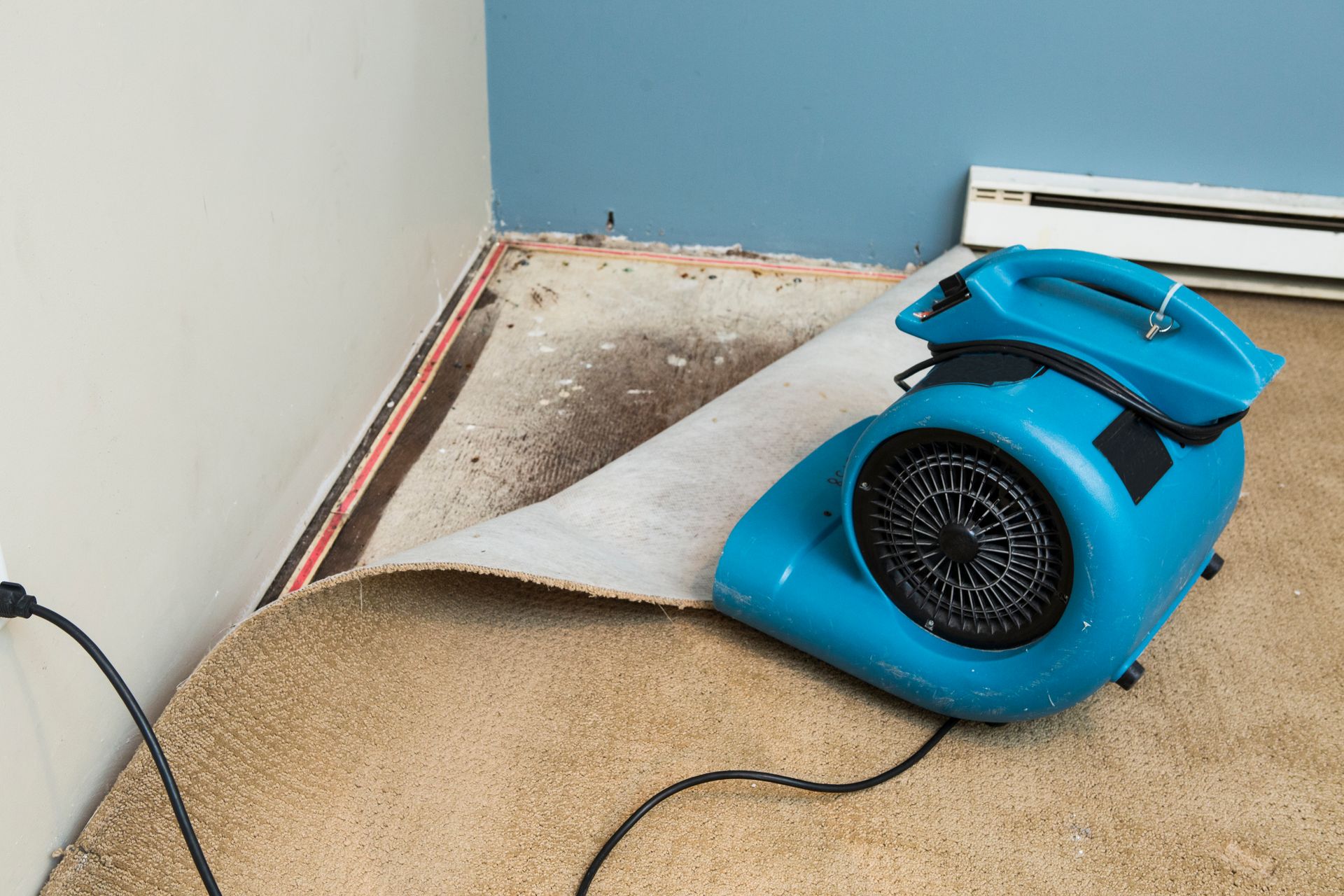
Removing standing water is only the beginning of a proper water-damage response. Carpet, padding, subflooring, drywall and wood can all retain moisture after the visible water has been extracted. A surface may feel dry while moisture remains trapped underneath or inside surrounding materials. That is why HSquared uses two different types of drying equipment: Air movers create evaporation. They move dry air across wet surfaces, helping moisture leave carpet, flooring, walls and other materials. Dehumidifiers remove that moisture from the air. As air movers increase evaporation, the moisture enters the surrounding air. A professional dehumidifier captures that moisture and removes it from the structure. Using air movers without adequate dehumidification can leave the room extremely humid. Using a dehumidifier without enough airflow can make evaporation unnecessarily slow. The equipment must work together as a drying system.
Gloved hands use a utility knife to score a gray tile floor.
August 27, 2026
Grout can darken again because of remaining soil, moisture, cleaner residue, damaged sealer or permanent discoloration. Learn how to identify the real cause.
More Posts